Complex
trauma survivors face a dilemma that very few can fathom: they are
forced to confront present-day stressors while attempting to resolve
triggers from the past. These layers upon layers of trauma take courage,
support and time to unravel. The healing journey of a complex trauma
survivor who has several sources of toxic stress is multifaceted. Their
day to day reality is filled with tiny terrors embedded within larger
cracks in the psychological war zone that is their psyche.
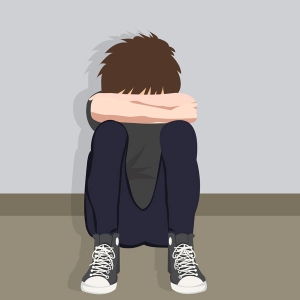 Survivors
of bullying and other traumas face a double bind: not only are they
oppressed by their peers, they are often oppressed by family members,
authority figures and other life circumstances. When bullying is also
supplemented with other microaggressions or tumultuous life events, the
trauma is undeniably more forceful in its impact. What happens when the
child is bullied at both school and the home, both meant to be safe
places? What sort of effects linger far beyond childhood, when not only
peers but also parental figures simultaneously terrorize the victim? Or
what about the impact of chronic, severe bullying – a form of bullying
which occurs for years across the child’s entire school career, rather
than short-term?
Survivors
of bullying and other traumas face a double bind: not only are they
oppressed by their peers, they are often oppressed by family members,
authority figures and other life circumstances. When bullying is also
supplemented with other microaggressions or tumultuous life events, the
trauma is undeniably more forceful in its impact. What happens when the
child is bullied at both school and the home, both meant to be safe
places? What sort of effects linger far beyond childhood, when not only
peers but also parental figures simultaneously terrorize the victim? Or
what about the impact of chronic, severe bullying – a form of bullying
which occurs for years across the child’s entire school career, rather
than short-term?
The Effects of Life-Long Bullying
When
one has undergone several sources of abuse throughout his or her
lifetime, including but not limited to bullying, emotional neglect or
abuse by parents, witnessing domestic violence, and/or even sexual
abuse, starting from early childhood, the simultaneous wounding from
multiple violations literally rewires the brain, creating disruptions in
identity, self-efficacy and interpersonal effectiveness. According to Bessel van der Kolk,
trauma causes the brain becomes re-organized to deal with danger,
rather than mindful of present-day engagements; trauma survivors become
subconsciously programmed to feel an overwhelming, pervasive sense of
fear and helplessness.
Bullying already poses a severe socioemotional and academic threat
to victims who endure it; victims of bullying are more likely to drop
out of school, commit suicide, abuse substances, struggle with anxiety
and depression, and have low self-esteem. If a child is targeted for
bullying without protective factors such as supportive family members or
validating authority figures, this form of alienation exacerbates toxic
stress in the child’s life and presents high risks to their early
development. A child abandoned by their family members or school
administration during difficult circumstances suffers undeniably more.
According to the Center on the Developing Child at Harvard University,
“Without caring adults to buffer children, the unrelenting stress
caused by extreme poverty, neglect, abuse, or severe maternal depression
can weaken the architecture of the developing brain, with long-term
consequences for learning, behavior, and both physical and mental
health.”
Complex Trauma and Complex PTSD
While
singular trauma is often linked to the development of PTSD, complex
trauma can cause symptoms beyond PTSD – it can result in Complex PTSD.
Judith Herman first coined the term “Complex PTSD” to explain what
occurs when an individual experiences a prolonged period of
victimization and captivity, usually experienced in situations like
long-term domestic violence, long-term child sexual abuse, prisoner of
war camps and organized child exploitation rings.
In
addition to the regular symptoms of PTSD, which include hypervigilance,
avoidance, dissociation, nightmares and flashbacks, someone with Complex
PTSD also experiences issues with emotional regulation, consciousness,
self-perception, distorted perceptions of the perpetrator and
disruptions in interpersonal relationships.
Childhood
abuse can be considered a form of ‘captivity’ and so can prolonged
bullying when the child perceives no means of escape. The causes of
complex trauma can thus be diverse and varied. According to trauma
therapist Pete Walker, multiple sources of trauma can lead to a
pervasive sense of toxic shame, a cruel inner critic and emotional flashbacks which cause the survivor to ‘regress’ back into the original traumas of the past.
Although
Complex PTSD is often associated with long-term sexual or physical
abuse, Walker confirms that long-term emotional neglect and assault can
also be a factor. And indeed, many studies confirm that verbal and
emotional abuse can cause just as much damage to the early developing
brain as physical abuse (Teicher, 2006; Choi, 2009; Copeland, 2013).
Reenacting Trauma: The Trauma Repetition Cycle
Part
of Complex PTSD is what therapists call “repetition compulsion.” In his
book The Betrayal Bond: Breaking Free of Exploitative Relationships,
Patrick Carnes writes, “In part, trauma repetition is an effort by the
victim to bring resolution to the traumatic memory. By repeating the
experience, the victim tries anew to figure out a way to respond in
order to eliminate the fear. Instead, the victim simply deepens the
traumatic wound.”
It
goes without saying that the number of traumas one experiences
simultaneously will factor into the strength of the trauma repetition
cycle. Traumas compounded with other traumas will increase the overall
risk for trauma repetition in adulthood. It is no surprise that a study
showed that children who are both mistreated at home and by their peers
are more likely than children only mistreated at home to show
significant mental health problems later in life. Due to the immense
impact of these traumas as well as the emotional and psychological
warfare that often accompanies bullying, survivors become conditioned to
engage in negative self-talk, blame themselves for the abuse they’ve
suffered and continue to the vicious cycle of abuse. They may struggle
with a shame that should belong to their perpetrators and develop
maladaptive ways of coping. These maladaptive mechanisms are attempts to
survive unbearable, overwhelming lifelong trauma through destructive
means that inevitably reenact and reinforce the trauma.
Complex
trauma survivors may seek unsafe mechanisms to regain control (such as
self-harm, undereating or overeating, abusing drugs, etc.) as an attempt
to survive the experience. Toxic shame
that arises from incidents of bullying and abuse can lead to behaviors
such as sustaining abusive relationships, addiction, eating disorders,
and reckless sexual behavior as futile attempts to avoid the trauma and
create “numbing” in response to the symptoms. For example, The Adverse Childhood Experiences study
showed that abuse in childhood not only contributes to increased risk
for health problems such as obesity, heart disease, cancer, stroke, it
also increased the risk of alcoholism, depression, suicide attempts,
adolescent pregnancy, STDs, and missed work.
This reenactment of past trauma is not a coincidence – rather, it is a consequence of the trauma itself.
Social Isolation, Anxiety and Destructive Relationships
Another
symptom of the complex trauma that accompanies bullying is increased
social anxiety and self-isolation as a form of self-protection; bully
victims often withdraw from school activities to avoid the sites where
the bullying took place. They may become fearful and distrusting of
their peers as well as authority figures, especially if they felt those
people did nothing to protect them.
This
pervasive sense of distrust unfortunately does not make the survivor
immune to repeating these patterns in their adult relationships. When
childhood trauma is ongoing and chronic, it becomes overwhelming to the
body and leaves the body in a constant state of hypervigilance and
hyperarousal (Perry, 2000). Betrayal by trusted friends, family members
or even partners can cause what Patrick Carnes calls a “betrayal bond,” or trauma bonding.
Trauma
bonds are bonds that develop between victims and their abusers; these
bonds act as defense mechanisms that allow victims survive a tumultuous
and hostile environment. Survivors of bullying both at home and at
school may develop people-pleasing habits due to having to walk
eggshells around their childhood abusers.
What conditions survivors to become tone-deaf
to emotional and psychological violence in adolescence can also compel
them to seek partners and friends that remind them of their first
oppressors in adulthood. As bullied children become adults, they see
emotional abuse as “familiar,” a dangerous comfort zone that keeps them
trapped within the trauma repetition cycle.
This
is why so many complex trauma survivors often blame themselves and
continue to ‘bully’ themselves through self-harm when they engage in
behaviors that are self-destructive, not knowing that trauma reenactment
is often a symptom of their Complex PTSD.
Healing Complex Trauma
Despite the complex nature of the trauma
that has been endured, there is hope for healing and self-reflection.
Complex trauma survivors can address their subconscious programming
using diverse healing modalities, including but not limited to
traditional modes of therapy, EMDR, art therapy, hypnosis, sound
therapy, meditation, yoga, reiki healing and other forms of bodywork
that enables them to release the trauma on the level of mind, body and
spirit. Healing modalities should always be discussed with a certified
trauma counselor to ensure that the survivor is addressing their unique
needs and triggers.
Survivors
can learn to grieve the losses they’ve had in both childhood and
adulthood, with the willingness to validate all of the emotions that
arise from complex trauma. They can begin to gain distance from negative
self-talk and learn to “reparent” their inner child with self-soothing
techniques. They can seek validating support networks via group therapy
with other trauma survivors, trusted friends or mentors, trauma-informed
survivor forums and online communities. Most importantly, they can
rewrite their narratives of helplessness to those of power and agency.
While complex trauma survivors face a lifetime’s worth of bullying, they
also develop a lifetime’s worth of resilience.