Showing posts with label Relationship therapy workshop. Show all posts

Monday, 30 October 2017

Workshops For Self Improvement


Rio Retreat is a part of The Meadows organizes a different workshop for mental health and healing. Men and Women respond to everything differently as they are programmed differently. It is a 3-days Men’s way professional development workshop offers practical guidance and tools for professionals working with men in navigating these challenging areas. Many treatment professionals may be unintentionally re-traumatizing male participants, thereby increasing their risk of failure in the program.


Wednesday, 14 June 2017

Healing Heartache: A Grief And Loss Workshop

Healing Heartache: A Grief And Loss Workshop provides a safe, sacred for participants to lean into the grief, which facilitates the healing. Loss can come in many forms including death of a loved one, loss of one's health, relationship losses, major life changes, lost opportunities, etc. During this 5-day workshop:

 
  • Cumulative loss over the life cycle will be examined,
  • Myths and inaccurate messages about grief will be dispelled, helping to normalize feelings,
  • Thinking processes and patterns of destructive behavior following trauma or loss will be explored
  • Feelings and words left unsaid will be released through experiential exercises,
  • Issues pertaining to relational problems will be addressed, with an emphasis on recognizing emotional reactions to loss, trauma, and broken dreams,
  • Resources will be offered to assist participants in moving forward, and
  • Psycho-education on grief and recovery will be provided, offering hope for the future.
To register, or for more information, call 866-835-5431.

Wednesday, 7 June 2017

How to get deal with grief? – Counseling for grief in Arizona

Grief is a part of life and more we avoid it, more we suffer. If we do not grieve, we are tending to be emotionally weaker. People who do not feel pain are said to be the most vulnerable people. The vulnerability could change into addiction and disorders.
Thus, Rio Retreat – center for grief counseling in Arizona. At Rio retreat, workshops are created to heal the pain. There is no such concept as “ONE SIZE FITS ALL” when it comes to grief. Every person heals in his own way at proper time.

 
However, following are the ways to deal with grief and loss:
  1. Identify and acknowledge:
If you identify the source of grief and acknowledge it rather that ignoring it, you will feel lesser need to grieve and you will heal. There are times when we do not let ourselves break down but that is incorrect. Try to identify all the situations and manipulate them, which bring up sadness or pain for you.
  1. Cry your eyes out:
One of the best reasons to grieve is to cry your heart out. This will lighten up your mood. Not crying will give you anger and addictions that will harm you even more. Do not think about others and just cry yourself to the point where you certainly don’t cry for the same reason again.
  1. Talk, Talk, Talk:
Most of the problems vanish by talking. Take the help of the counselor and talk to him about your grief. Talking and crying reduces 90% of the problems and will save you from indulging into alcohol or drug practices. There are many health care centers providing counseling for grief in Arizona. Contact them and you will definitely find a good solution to your grief.
These are the healing modes that work out. Embrace your grief rather than ignoring it. It will reduce your pain rather than increasing it.

Thursday, 25 May 2017

Functional Adulthood as a Spiritual Practice


In this Mindful Monday series, we have presented many different ways of being mindful and many different benefits of having a mindfulness practice. We know that mindfulness is a deliberate practice and a deliberate experience of being present in the moment.

Today, I’m excited to talk about a passion of mine, which is working with the core issues and the ego states within mindfulness meditation. Meditation helps us to move away from our wounded child ego state and toward our functional adult ego state.


The Wounded Child Ego State
Rio Retreat Centere At The Meadows, we teach about the ego states as they were laid out by Senior Fellow Pia Mellody in her work on the Model of Developmental Immaturity. She explains that how our thinking and beliefs can be distorted in the wounded child ego state.

Sometimes, when we find ourselves in our wounded child ego state, we feel like we’re not as good as other people and we feel bad about ourselves.
We also tend to feel very vulnerable. We’re not able to protect ourselves when someone is critical or just not being present with us. We take it personally. We tend to have difficulty staying present because we give into our distorted thinking and we feel uncomfortable being in our bodies.

Moderation as a Spiritual Practice
I and my team had the wonderful privilege of spending some time with Pia Mellody recently. She reminded us all that working on our core issues and learning to live moderately is a spiritual practice.
It’s a spiritual practice to love ourselves and feel equal to other people.

Wednesday, 17 May 2017

How God Shows Up in Recovery


It’s Totally a God Thing

I am frequently delighted by the many ways God shows up when people are on their healing journeys. When I refer to “God,” I am referring to Spirit, the Universe, Nature, the Soul, our Inner Light—or any other term we might use for a divine sense of connection with something greater than us. And when I refer to God “showing up,” I’m talking about the awe-inspiring things that happen to us that seem to be more than mere coincidence.

 
That was totally a God thing!” is the phrase I frequently use to express my amazement when I experience those unplanned events that couldn’t be more perfect if they had been carefully planned. I see the perfect mix of strangers based on their traits and backgrounds come together in a group and have unbelievably powerful experiences. They may finally see their partner’s point of view in someone’s story, or understand the depth of their parents’ own trauma leading to freedom to forgive. This often feels to me like more than a random gathering of folks; it feels like there’s an invisible influence shaping our experiences.

I also experience it as very subtle divine guidance when I have an idea for an intervention that isn’t even logical. I recently suggested that someone do some work with her addict self. She gave me a look of pure shock. This woman had been in solid recovery for more than 8 years. There was no logical reason for my suggestion. I couldn’t say why I thought of this process because it didn’t make sense.

But, when she put her addict self in the chair in front of her, she was very real. And when she sat in that chair and felt that part of her that was still alive and well in her, she was able to truly release guilt and shame and bring that part into recovery. She later shared that she would have never thought it in a million years, but that was the piece that was missing in her healing work.


It was totally a God thing.
I feel that this kind of experience must happen in recovery programs in general and in all of The Meadows programs, but we definitely get to experience it strongly in our workshops at The Rio Retreat Center.
The Survivors II workshop is open for participants to continue with another layer of childhood trauma work, adult trauma, relationship issues, addictions, etc. If you feel inspired or “guided” to continue your healing journey, it may be the workshop for you.

Wednesday, 26 April 2017

Couples Bootcamp: Working It Out In The Desert

Corrine and Joe have been married for seven years. This marriage is the second one for both of them. They elected to attend Couples Boot Camp to “improve our communication and resolve ongoing arguments about the amount of time we spend together.”

048731097de322302aff7e52151c991d_XL 

While each of them proclaims their love for the other, they also have different expectations about what coupleship looks like in terms of quality personal time vs. family time, and the issues are causing a rift that invites bickering and further withdrawal.

Consider this: Your partner’s behavior isn’t what drives you crazy. Your own brain is.

What you learned about relationships likely came from interactions, dysfunction, and traumas you experienced in your family of origin. You may often hear the strident voice of your immature brain reminding you of the less-than-ideal things you may have learned about the way adult couples are supposed to treat as you navigate your relationship with your partner. Rob complains that Jennifer is so reticent and depressed that he has lost hope that he can be enough for her. He is weary of being the cheerleader and counselor to her. Jennifer admits she has low self-esteem and counters that Rob’s constant nagging and criticism have worn her down. Both come from family backgrounds of addiction and emotional abuse. They aren’t sure they can remain together; however, both recognize that their unresolved issues will likely carry over to any future partners. They state that Boot Camp may be their last resort to stay together.

At this workshop, participants learn that they are not so much addressing their partner’s behavior as they are reacting to unaddressed family of origin wounds. When they stop projecting their past relational disappointments onto their spouse or partner, the path becomes clear for a more rewarding, intimate coupleship. Boot Camp process includes exploring family of origin roles and dysfunctional messages that individuals carry into their committed relationships.

Marilee and Jason have been together since high school. They acknowledge that they argue and “fight like we are still 16 years old.” As their 29th anniversary draws near, they wonder if they have simply outgrown each other or will they be able to redefine the relationship from a new perspective as life-long partners. They value the comfort and joy their children and grandchildren give them but dread the thought of spending the rest of their lives unhappily married to each other. Their objective at Boot Camp is to find a way to restart the marriage as mid-life adults.

Hope is here

This workshop curriculum invites exploration of skewed relationship thinking and offers respectful solution-finding to unresolved and/or repetitive relational issues. Couples find that this supportive environment is a safe place to examine difficulties within their relationship. Because the participants reduce areas of shame and open up previously-closed dialog, they learn through guided processes to problem-solve together and mediate agreeable solutions. Among other communication tools, healthy boundaries and limit-setting are introduced as effective strategies for bringing couples to a higher level of trust and intimacy. “Aha!” moments are not uncommon throughout this week.

Workshops are held for two to three couples at a time. The benefits of positive and supportive feedback from the group peers are plentiful. Among them:
  • couples realize that they are not alone in their relational issues; others have the same problems;
  • hearing viewpoints of several different facets can shed light on a previously murky solution;
  • genuine, positive regard among all the participants can bring healing in unexpected ways for other areas of wounding.
If you are open to learning more about yourself, your beloved, and the life path you both share, Couples Boot Camp may serve as the relationship experience you seek. For more information or to enroll in a Couples Bootcamp call the Intake Department at 1-866-986-3225.

Content Source

Tuesday, 18 April 2017

Equine Therapy for Therapists and Counselors

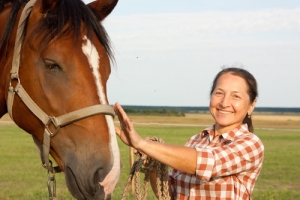
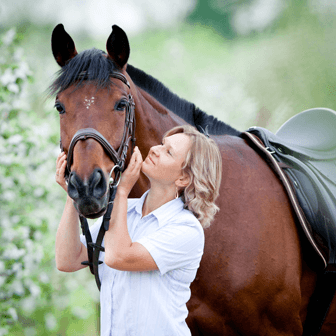
I have been through the desert on a horse with no name, and it was a profound experience. The experience I’m talking about is the Horses Helping Clinicians workshop offered through the Rio Retreat Center at The Meadows. It takes place on a beautiful ranch, tucked behind some mountains, just outside of Wickenburg, Arizona.

Relationship Therapy Workshop

The first morning of the workshop, after introductions, workshop facilitator Colleen DeRango said, “Pick a horse or let a horse pick you.” As I made my way from horse to horse, I waited for a sign, not really knowing what a sign would even look like. After standing in front of a number of horses, a black and white horse with no name picked me.

amenities

It’s hard for me to describe this experience with words. It just isn’t possible to do justice to exactly how incredible this workshop was for me. What I can tell you is that without any words at all, that horse gave me a great deal of valuable information about myself. He showed me how I relate to myself, my feelings, and my biggest challenges in life.

Register for Horses Helping Clinicians
Our professional development equine workshop, Horses Helping Clinicians: Somatic-Based Skills to Assist Clients in Restoring Resiliency, is designed to allow professionals to do their own work through the use of equine therapy, safely surrounded by their peers. While this workshop is not designed to teach therapists how to facilitate equine therapy, 18 clock hours of continuing education are offered for attendance. To enroll in this workshop, please contact our intake department at 1-866-280-2874.

Tuesday, 21 March 2017

Find Your Pot of Gold


Achieving change and self-actualization does not have to be as elusive as finding a pot of gold.
Whether you're struggling with the impact of an emotional childhood trauma, grieving a loss, wanting to repair family dynamics, or simply want to develop a greater sense of self, the Rio Retreat Center at The Meadows has a workshop that will fit your needs.
 
All of the Rio Retreat Center's workshops are facilitated by licensed and certified professionals. Our experts have experience helping individuals identify the root causes for their negative behaviors and provides them with the tools necessary to transform their lives and begin making productive decisions.

If cost is a concern, you’re in luck!

Register for a 5-day workshop before March 31, and receive a $500 discount. (Some exclusions do apply.)
Find full workshop descriptions, dates, and registration information on The Rio Retreat Center website or download a printable workshop catalog.

Source Link:- Grief Counseling Arizona

Monday, 13 February 2017

Don’t Carry Shame into The New Year

Have you ever sent the wrong text message to the exact wrong person? I have. In fact, I did it recently. I sent a message about a person TO THAT person—the horror! The consequence? Well, besides being cut from that person’s Christmas card list, I suffered a complete and utter shame attack.
healing-trauma-workshops
In Facing Codependence, Pia Mellody describes a shame attack as feeling “as though your body is getting smaller. You may blush, want to disappear, run away, or crawl under your chair. It seems that everyone is looking at you. Feeling nauseated, dizzy, or spacey is also common” (p.103). I can vouch for this: I curled up in the fetal position and wanted the ground to swallow me up. Not dramatic at all…

Mellody explains that a shame attack occurs when we encounter “carried shame.” Carried shame is induced into us from various types of traumas and abuses experienced in childhood. It diminishes our ability to experience self-worth and value and causes us to feel perpetually less than other people.

This carried shame forms the basis for the first symptom of codependence: “difficulty experiencing appropriate levels of self-esteem…and is…the heart of codependence. And this is why codependence is called a shame-based disease” (Mellody, p.105 ).
Therefore, it is my New Year’s resolution to never send a text message to the wrong person ever again and avoid shame attacks from here on out.
OK, I’m joking.

My New Year’s resolution is to get better at practicing what I preach as a therapist. I want to continue to actively work on my carried shame that is at the core of my codependence.

So, I have made the decision and taken the necessary steps to continue with my recovery and progress made during my week at The Survivors I Workshop at The Rio Retreat Center, so that the next time I send the wrong text I can say “oops, my bad” instead of “I’m bad, take me now oh, Text Gods.”


Facing Childhood Trauma to Overcome Shame


The Survivors I: Healing Childhood Trauma Workshop
is based on The Meadows Senior Fellow Pia Mellody’s pioneering work in her book, Facing Codependence. It is an essential component of The Meadows inpatient treatment program and is also open to interested individuals as a stand-alone workshop.

In a safe supportive environment, Survivors I explores the origins that fuel self-defeating behaviors such as addictions, trauma, mood disorders, and troubling relationships. The primary focus of this workshop is processing and releasing the negative messages and emotions that were rooted in painful experiences from the past allowing the freedom to embody your authentic self. For more information, or to register, call 866-244-4949 or email us.

Monday, 23 January 2017

A Meditation on Grief

Grief can result in a variety of types of losses. Some of these losses are well-recognized such as divorce, the loss of a loved one, or the loss of a job. Other types of losses can be just as difficult to deal with and sometimes less understood, such as moving, illness, or any other unexpected life changes. Loss can be experienced with both negative and positive events.
An event may be positive overall, such as getting a promotion at work but can still be associated with loss. It’s a loss of what is familiar—a loss of living in the old way.

counseling-for-grief-arizona

Change can be associated with these feeling of loss. So perhaps today you are dealing with a change that is relatively positive and your grief is relatively mild. You may be coping with a significant loss and are going through a challenging grief process. Or you may have experienced a huge loss that’s profoundly 
changed your life, and you’re having difficulty dealing with grief.
Whatever your situation is, grief is real.”

Traumatic Grief

Grieving is often all-consuming and extremely painful, but overall, it is a normal and healthy experience. It can become unhealthy, however, when the symptoms of grief — such as yearning for the deceased, feeling angry about the loss, feeling that life is meaningless or feeling unable to move on — last for six months or more.

Researchers have tied traumatic grief, also known as prolonged grief of Complicated Grief Disorder, to an increase in the risk of suicidal thoughts, heart problems, and cancer. Studies have also shown that grief may trigger depression in the same ways being physically or sexually assaulted or losing a job can trigger the sometimes debilitating condition.

Though traumatic grief may share similar symptoms as clinical depression, anxiety and post-traumatic stress disorder (PTSD), many scientists believe that these disorders and Complicated Grief Disorder affect different circuits of the brain. Some also think there’s a possibility that traumatic grief may predict more severe outcomes than depression or PTSD.


Healing From Grief and Loss

During “Healing Heartache: A Grief and Loss Workshop” at the Rio Retreat Center at The Meadows, a safe, sacred space is created in order for participants to lean into the grief, which helps to facilitate healing.

Those who attend the workshop also will learn about basic psychological concepts related to grief and loss with an emphasis on recognizing emotional reactions to loss, trauma, and broken dreams. They will also dispel myths and inaccurate messages about grief and learn how to break free from or avoid patterns of destructive behavior that tend to follow trauma and other losses. Read More

Tuesday, 13 December 2016

Are You Still Facebook Friends with your Ex?

What’s one of the first things people do when they break up with someone?
These days the most common answer is, “Check his or her Facebook page,” right?


fb-addiction

So why do we do this? Why do we torture ourselves? Why is it so hard to delete them and start working on healing and moving forward?
Long, long ago, in the ancient olden days before Facebook, texting—even before the internets—when two people broke up the only way to remain in touch was to…

A) Ask their friends about them,
B) Call (and often hang up—until Caller ID was invented) or
C) Drive by their house (also known as “stalking.”)


There were no “check their status” or “see who posted on their wall” options. (Technically, this could also be called “stalking.”) Unfortunately, what modern technology can do is cause us to obsess more, feel jealous more, and stay stuck in the past.

Tuesday, 22 November 2016

Six workshops for Personal growth…

Personal Growth workshop Arizona
Growth and development are two strong words as they can be in a life of an individual. Many of you must be still unaware about your own mental, physical, social and emotional health. It is very necessary for you to have knowledge about your own needs, wants, desires and places for improvement. Rio Retreat Centre at The Meadows brings you six different types of Self-Improvement Workshops and Personal Growth workshop to know your inner self. They are:
cpmmu9vwgaaoqxg
  1. Men suffering from sexual addiction are often ashamed and embarrassed. Thus, we help them overcome their embarrassment and help them heal. This workshop is for active people who want their recovery faster and prevent relapse. Positivity is instigated in them such that they are taught to have productive experiences as well as to maintain positive relationships.
This workshop is held in rustic ranch near Wickenburg, Arizona. This program is very interesting as it consist of experiential activities with horses, and focusing on self-esteem, needs, desires, emotional regulation, and spontaneity.
  1. Mind & Heart: A mindful path to wholehearted living
This workshop helps you maintain balance between mind and heart. We often get confused what to do and what not to do because of rationality of mind and correctness of heart. Thus, this workshop at Rio Retreat Centre helps in improving decisions and continues taking them correctly.
It is said that a man cannot be taught HOW TO BE A GENTLEMAN? Here, at Rio Retreat we teach them to be. We assist men to recover from trauma, with the help of curriculum by Dan Griffin. This five day intensive workshop is based upon books A Man’s Way through the Twelve Steps and A Man’s Way through Relationships by Dan Griffin.
love-ur-self


Tuesday, 8 November 2016

Tending the Garden of Our Souls

The girl was anxious, wanting to get back to the rose bush and save it from being ravaged by the beetle that was just doing what a beetle does. Already the pattern of codependence was set up. There I was at such a young age trying to stop the destruction that seemed an inevitable pattern of my family. As though the hunger of my fearful unhappy parents were just doing what they did to survive and the child was the rose. The analogy was daunting.


Tending to the garden of our soul is not something we think about often. But Spirit, in it's divine wisdom, set up a situation for me to heal the foundation of my roots as well as protect how I bloom.

A few months ago I was getting ready to set course with a production company on a project when Spirit told me, "We want you to heal some of your history." Hum, well, of course I wondered how that would happen, but our agendas or what we think about how such a thing can transpire is often contrary to what we WANT to have happen. I like to have things be loving and copacetic so that communication can be resolved in a harmonious way. But this time I could not make that happen because Spirit had a different idea.

Source Link : Relationship Therapy Workshop

Monday, 24 October 2016

Living in Abundance: Balancing Work, Money, and Relationships is a five-day didactic, experiential, and psychodynamic intensive that will help you develop insights into your relationship to money and work.


Understand The Issues

Living in Abundance is a five-day intensive that will help you develop insights into your relationship to money and work.

Living in Abundance is a didactic, experiential and psychodynamic intensive lead by a facilitator trained in the area of financial and work disorders.


During the workshop, you will address a myriad of disorders including money obsession, work addiction, under earning, spending addiction, gambling, hoarding, deprivation, and codependence related to work and finances. The goals of this workshop are to help participants:
  • Discover how your behavior related to money and work developed
  • Recognize the rewards and costs of your behavior to one’s self and others
  • Obtain a treatment plan which intervenes on existing behavior and fosters a healthy relationship with money and work that will also enhance your relationship with yourself and others, more about

Tuesday, 24 May 2016

No Man is an Island: Dan Griffin on Facebook Live


What does it mean for a man to ask for help? Not just once, but over and over again, as often as necessary?
On June 2, 2016, join Dan Griffin (Senior Fellow at The Meadows) for a brief talk via Facebook Live. He’ll explain why it’s difficult for men to ask for help, and offer suggestions on how they can begin to find the support they need.

The talk will begin at 1 p.m. PDT (4 p.m. EDT) on The Meadows Facebook Page.


In the meantime, check out Dan’s latest book, A Man’s Way Through Relationships. A five-day workshop based on the book— A Man’s Way Retreat— is also available at the Rio Retreat Center at The Meadows.


Wednesday, 4 May 2016

How Horses Guided One Therapist From Fear to Freedom


Nicole Clarke, MS, Intake Manager of Outpatient Services
I recently had the opportunity to attend Spirit: A Somatic Equine Workshop at The Meadows. It was a life- influencing experience, am excited to share a little of my story with you.

As a clinician and someone who encourages others to experience their emotions daily, it was not until I worked with a horse that immediately knew me better than I knew myself that I was able to see the power of somatic experiencing.
I arrived scared to approach a horse from a bad experience more than 20 years ago. I was thankful for the setting, the facilitators Coleen and Buddy, the other group members, and of course, the horses. All immediately made me feel welcome. Within two hours I was able to walk up to the horse that I was encouraged to work with for my processing. Little did I know, the horse had already chosen me.

Letting Your Emotions Guide Your Thoughts

Along with the education and rapport building with others, I found a continuous feeling of peace on the ranch that I could not ignore. As a traditionally trained talk therapist, I knew that the concept of working the “other way,” by allowing my emotions to guide my thoughts was going to be a challenge.
“Let it go,” and “go ahead and feel that,” were two things I vividly remember Coleen saying to me. “Ok, how did that feel?,” was a question Buddy asked me multiple times. It was clear to me on the first day how difficult the transition would be for me but I was ready to trust the process and leave all I had learned behind, even if only for those three days.
e would not be comfortable coming near me until I learned to be honest about how I felt. The horse would not let me lie.

Walking into the circular pen alone with the horse for my first somatic experiencing exercise was immediately insightful. My emotions were in chaos and my long-term defense mechanism of talking them away would not work in this situation. Not only was I supportive and encouraged by Buddy and Coleen to finally allow myself to feel things I had buried for so long, but the horse also let me know that sh As my left brain continued to fight the desire to let my emotions be felt, the facilitators and group continued to provide support through experiential exercises that did not tell me, but showed me it was ok to “let go.” It is always nice to have support from others, but there is nothing like having a horse walk up to you, its head low with eyes half closed, showing support for the pain you were finally allowing yourself to feel.

Transformative Healing

Each day I drove back to the Buddy’s Ranch wondering what insights the day would provide. As I increased my personal insights through progressive relaxation, experiential processing with others, and somatic experiencing, I would begin to realize that I was learning more about myself in these three days than I had in the last 20 years.

By day two, I had already begun to change. I returned home from the workshop to continue with everyday life and experienced something that would have typically upset me. Instead of getting frustrated and overthinking the situation, I was able to recognize how I felt internally and work on that discomfort. It was amazing how I quickly made better decisions in spite of that frustration. It was an initial learning experience that I have returned to many times since leaving the workshop.

In my position at The Meadows I frequently get asked about this specific workshop and who it might be helpful for. I now get to smile to myself and answer that question from my heart and not my head. I tell people that this is a special workshop, one that promises to be life changing and unlike anything that you have ever experienced. This is true for all individuals, including clinicians and horse trainers.

There are no words to express my gratitude for the experience. It has made me a better person and for three days, allowed me to truly see myself as the person I am, and not just describe her in a way I had seen fit.

Register for Spirit: A Somatic Equine Workshop

The Spirit Equine Workshop allows participants to address self-esteem, boundaries, honoring reality, wants and needs, emotional regulation, and spontaneity through experiential activities with horses. It was created exclusively for a small group of no more than five participants and is facilitated by two gifted extremely gifted professionals. If you’re looking for a way to achieve a real emotional break-through, this may be the perfect workshop for you. For more details, call 800-244-4949, or visit the workshop’s webpage.

Source Link