Showing posts with label Healing trauma workshop. Show all posts

Tuesday, 26 March 2019

Mental Health Retreats – Solution for Your Health Problems

Mental-Health-Retreat.png
Issues in the mental health are caused by many factors such as genetic traits, exposure to negative influence during birth, mental chemistry and brain illness, depression, anxiety and negative stresses of life such as a death of someone close, financial issues, emotional or physical abuse or the environment of a person. Mental health retreats are important for a person as they directly bring relief to the mental health problems by alleviating stress and providing comfort in their facilities by way of amenities, privacy and a chance to relax. The surroundings are natural and thus it is beautiful and untouched. One can reconnect with nature and calm his brain which makes him feel refreshed, healthy and energised. The treatment at these mental health retreats is an effective solution to cater to your mental issues.

Thursday, 14 March 2019

The Trauma/Addiction Cycle

Trauma Addiction

Addiction and trauma are interrelated. The blog checks out how they are a vicious circle and each of them depend on the other. Trauma leads to addiction and addiction leads to more trauma and more trauma eventually leads to more and more addiction. These are two inter-dependent problems and needs to be treated together. The primary problems related to trauma addiction involved substance addiction and traumatic experiences in the past. At times, when parents start comparing their kids among each other or if one of the kid is not doing well in life and is getting addicted to self-medication or if there is some kind of long term injury this can lead to trauma and addiction. Besides, kids being overly subjected to traumatic experiences in their childhood also leads to them being addicted and traumatized. People need to accept themselves and not try to be the better version of themselves due to parental or societal pressure. Only then they would be able to recover and heal themselves.

Tuesday, 24 October 2017

Emotional Healing Retreat

Specialized For Your Needs

Our workshops allow participants to learn and receive support from people facing similar issues. These transformative programs help individuals to identify negative patterns, and break the cycle of negative behaviors that holding them back from living the life they desire.

Counseling for Grief Arizona

Committed To Seeing Our Participants Succeed

Workshops at the Rio Retreat Center are designed to help you understand your own needs, desires, emotions, habits, and everything else that makes you who you are. The more you know about yourself, the better equipped you are to engage in healthy relationships and have an improved sense of self. To learn more about the Rio Retreat Center or to sign up for one of our groundbreaking workshops, call us at 866-441-0368 866-441-0368 or fill out the form below and a representative will be happy to provide you more information.

counseling for grief arizona

Monday, 9 October 2017

Healing The Family


Content Source : Family Healing/Therapy Retreats

The Family Matters workshop is designed to assist members of a family with establishing a supportive and healthy recovery environment by encouraging them to be authentic, communicate productively, utilize boundaries, and function in a healthy fashion. During this workshop, family members learn how co-dependent behaviors, trauma, mood disorders, and/or addictions can impact a family system. Family members develop tools to successfully enhance recovery and a relational family system. The primary goal of the Family Matters Workshop is to help members bridge the gaps that have plagued the family system.


The Family Dynamic

The Family Matters Workshop is important because it can:
  • Teach family members about how families function in general and, in particular, how their own functions. 
     
  • Help the family focus less on the member(s) who has/have been identified as ill and focus more on the family as a whole.

  • Help to identify conflicts and anxieties and helps the family develop strategies to resolve them.

  • Strengthen all family members so they can work on their problems together.

  • Teach ways to handle conflicts and changes within the family differently. Sometimes the way family members handle problems makes them more likely to develop symptoms.


Monday, 25 September 2017

A Unique Healing Experience


  • Expressive Arts
    Participants can express themselves through a variety of modalities ranging from painting to music therapy to psychodrama.

  • Yoga, Tai Chi and Acupuncture
    Many alternative or progressive exercises such as Tai Chi and Yoga reduce stress by focusing on healing the mind, body and spirit. We also incorporate Acupuncture, an ancient Chinese medicinal technique that eases pain, alleviates stress and promotes wellness.

  • 12-step meetings
    Twelve-step meetings help patients realize they’re not alone on their journey of recovery. At meetings, individuals have an opportunity to share their feelings and hear other people share their experience, strength and hope.

  • Live Music and Camp Fires
    Workshop participants will have opportunities to unwind and socialize in the evenings during live music performances and campfire activities.

  • Equine therapy
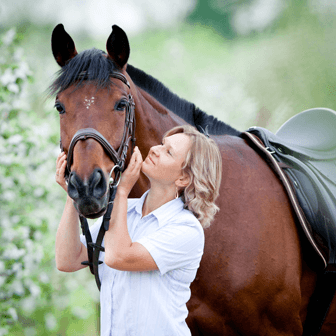
    Through interactions between patients and horses, patients learn new ways of dealing with trauma, addictions and relationships. Trained equine specialists use the interactions to illustrate the relationship patterns patients exhibit with people in their lives.

  • Challenge Courses
    Our challenge courses involve an intricate network of ropes, cables and logs. All activities are designed to address issues that are being explored through workshops including group communication, problem solving, trust, planning, teamwork, facing fear, cooperation, understanding self and self-esteem.

  • Meals
    Workshop participants will be served three meals per day, each prepared by The Meadows extraordinary chef. Meals are catered to facilitate balanced nutrition as part of the overall holistic healing experience.

The Rio Retreat Center Can Help


Workshops at the Rio Retreat Center at The Meadows are designed to help you understand your own needs, desires, emotions, habits, and everything else that makes you who you are. The more you know about yourself, the better equipped you are to engage in healthy relationships and have an improved sense of self. To learn more about the Rio Retreat Center at The Meadows or to sign up for one of our groundbreaking workshops, call us at 866-997-8770 or fill out the form below and a representative will be happy to provide you more information.

Content Source : Healing Trauma Workshops

Tuesday, 18 April 2017

Equine Therapy for Therapists and Counselors

I have been through the desert on a horse with no name, and it was a profound experience. The experience I’m talking about is the Horses Helping Clinicians workshop offered through the Rio Retreat Center at The Meadows. It takes place on a beautiful ranch, tucked behind some mountains, just outside of Wickenburg, Arizona.

Relationship Therapy Workshop

The first morning of the workshop, after introductions, workshop facilitator Colleen DeRango said, “Pick a horse or let a horse pick you.” As I made my way from horse to horse, I waited for a sign, not really knowing what a sign would even look like. After standing in front of a number of horses, a black and white horse with no name picked me.

amenities

It’s hard for me to describe this experience with words. It just isn’t possible to do justice to exactly how incredible this workshop was for me. What I can tell you is that without any words at all, that horse gave me a great deal of valuable information about myself. He showed me how I relate to myself, my feelings, and my biggest challenges in life.

Register for Horses Helping Clinicians
Our professional development equine workshop, Horses Helping Clinicians: Somatic-Based Skills to Assist Clients in Restoring Resiliency, is designed to allow professionals to do their own work through the use of equine therapy, safely surrounded by their peers. While this workshop is not designed to teach therapists how to facilitate equine therapy, 18 clock hours of continuing education are offered for attendance. To enroll in this workshop, please contact our intake department at 1-866-280-2874.

Monday, 20 February 2017

All of the Feels: Accepting the Gifts of Emotion


In our culture, we are taught that certain feelings are off limits. There is a general sense that if you’re not happy most of the time that you’re doing life wrong.
I went into my own therapy and my career of becoming a therapist to rid myself and others of all those inconvenient and unpleasant feelings of fear and pain. Before I began any of my own therapy, I didn’t even have words to describe what my therapist referred to as “feelings”. Why would I want to describe or acknowledge any of these horrible sensations and experiences with words that might allow other humans to understand what I was going through and maybe even see the real me?

After doing my best to avoid feelings in my therapist’s office for as long as he would allow, I acquiesced to his consistent, we’ll call it re-direction: “That’s not a feeling, that’s a thought”. When I started labeling my emotions I discovered something quite shocking—it takes a lot less energy and creates less suffering to just feel them and maybe, if you’re brave enough, to share them with someone else.


Upon deeper investigation, I began to understand that I had neatly tucked away my feelings. I had traded them in for a nicely organized chart of life experiences with lots of explanations and justifications to avoid ever experiencing any of those emotions. I later discovered this was called intellectualization, a distorted thinking pattern, set up by certain parenting missteps from my major caregivers.

The Gift of Emotion


I’ve also learned that each of the eight primary emotions offers us different gifts, and to avoid any of them negates a unique part of the human experience. It turns out that while I was avoiding all that pain and fear, I was actually avoiding a whole lot of joy, love, and passion as well.

Through my work here at The Meadows, I have seen how much damage can be done while trying to avoid feelings. People attempt to avoid feelings through various types of addictions and other unhealthy behaviors. Many times shame is a major contributing factor. Interestingly enough, as we try to medicate our feelings of shame and worthlessness, we are actually creating more shame, which then has to be medicated as well, leaving us in a never ending bind. By looking at our past we are able to identify the messages we received about which feelings are “okay” and which are not, and eventually learn to cope with all of them. By learning to tolerate and accept feelings the way they are, and not the way we want them to be, we allow ourselves to become more authentic. The result is that we are less prone to use those old methods of avoidance and self-protection that landed us in a heap of trouble.

The Eight Basic Feelings


So, you may be thinking, “why would I want to feel my feelings?” The answer is that each one of our emotions offers us a distinctive gift. Even fear, pain, and shame—emotions we are most likely to try to avoid—serve an important purpose.Healthy fear lets us know that we are in danger and should move to safety, literally keeping us alive.

Pain may be one of the reasons you’re on this particular website; and really, it’s one of the main catalysts for change. Most people do not enter a treatment program or make a major life change without first experiencing some amount of pain. Pain can be a real motivator and—let’s face it—sometimes a good cry feels really healing.

When it comes to our own shame, healthy feelings of shame offer us containment. As Pia Mellody says, we only need enough healthy shame to keep us from running naked down the street. Experiencing our own shame allows us to accept our own mistakes and humanity; and, with those experiences, we are able to accept the mistakes of others without all that self-righteous victim anger or resentment bubbling up.

Most people don’t end up in treatment because of having too much joy, passion, or love; however, maybe you grew up in a family where these feelings were not acknowledged or expressed. Joy, passion, and love are the building blocks of relationships and being able to get in touch with and express these three feelings can be a very powerful experience and improve your mood almost instantly.

Learning to Feel

I’d like to think that I’ve made friends with most of those eight emotions, and have learned that the most uncomfortable feelings offer me the greatest lessons.
If you are struggling to cope with your emotions, join us for one of our Survivors workshops. These workshops are designed to provide you insight into how your past is impacting your present, as well as, reducing reactivity and intensity of your feelings in your current relationships. Call 866-932-2036 for more information.

Source Link:-
Trauma Therapy Arizona

Tuesday, 28 June 2016

Confessions of a (Mostly) Reformed Perfectionist

By Tracy Harder, MSC, LAC, Survivors Workshop Facilitator
Do you remember the one question you missed on that fourth-grade science test that kept you from scoring 100 percent? Or the word you missed in every spelling bee you were in? I do.

In fact, I am very clear about the fact that water boils at 100 degrees Celsius and I am not a big fan of the words centennial, hippopotamus, or receipt. I have suffered from most of my life from perfectionism, which to me is no joke. Feeling shame about making a mistake and having the initial reaction of wanting to hide it is not fun. In fact, just the thought of writing this blog gave me anxiety. How can I possibly measure up to the people who have written blogs and have Ph.D.’s and more experience than me?

Perfectionist Tendencies Can Start in Early Childhood

My perfectionism developed and honed from a very early age. I remember when I turned four or five my parents took me to a fancy restaurant for crab legs. (What the hell?) I remember sitting there, prim and proper, with my hands folded in my lap. I remember people telling my mother what a wonderful, well-behaved child she had.

My mother beamed, and basked in the compliments. I figured out quickly, “Aha! This is how I earn my mother’s love and approval!”
From then on, I strived to make perfect grades and to always toe the line, always trying to be “good enough.” For you see, my beloved mother is a perfectionist herself and her perfect little girl reinforced her need to be good enough too.

Pia Mellody, in her book Facing Codependence, says, “Everybody’s poop smells. To be human is to be imperfect.”

She goes on to say that functional parents do not hold themselves up as the higher power in the family—the god and goddess if you will—and that when they make a parenting mistake that affects their children, they own it and make amends. But, what about those of us raised in a home where our parents were the god and goddess reigning supreme? A home in which mistakes were not okay?

I love my parents and through my own work, which has included going through The Meadows’ Survivors I childhood trauma workshop myself, I realize now that they were parenting out of their own trauma brought on by dysfunctional messages they got from their parents.

Perfectionism Hinders You More Than It Helps

Perfectionism has been a friend and a foe in my life. As a friend, it helped me a few years ago to organize and plan from the ground up what I must say was a pretty amazing wedding –although I was a complete and nervous wreck the day of. It also enabled me in some ways to complete a difficult counseling program and earn a Master’s Degree, but it took repeated attempts.

As a foe, it literally drove me to drink. And then, even after getting sober through a 12- step program, I continued to attempt perfection in my step work, which resulted in a relapse. Trying to be “perfect” can also alienate me from people, because my attitude becomes, “ I want to be perfect and am sure you must want to be as well, so let me show you how!” In respect to the core issues of The Meadows Model of Development Immaturity, this attitude is indicative of “better than” self-esteem, invulnerable boundaries, good and perfect reality issues, and containment issues of being out of control with controlling others.
Or, as Pia would say, I turn into “a tight ass.” This is not good for my relationships, to say the least.

Tips for Overcoming Perfectionist Thinking

For those of you reading this and relating, here are a few helpful techniques I use to alleviate the stress of perfectionist thinking:
  1. I give myself permission to be imperfect.
  2. I admit my mistakes to affirm that it’s okay to make mistakes.
  3. I make amends for my mistakes
  4. I remind myself that only my higher power is perfect and that I’m not my higher power.
  5. I do daily affirmations to a photo of my inner child, telling her she is perfectly imperfect just the way she is, and I treat her as such throughout the day.
The pain of the five core development immaturity issues mentioned earlier, and relationship issues drove me into therapy and 12-step programs. Both made it possible for me to practice these techniques.
As a result, there has been a considerable improvement in my relationship with myself and in my relationships with others. After all, who am I to think I could ever be perfect? Through the practice of admitting my mistakes to others I have realized that, for the most part,I am the only person who is not okay with my mistakes.
This corrective experience illuminates the fact that the people in my life now are understanding and forgiving. More often than not, they share their experiences with similar situations, thereby increasing intimacy and strengthening these relationships.
Perfectionism will always be a part of my personality, but the good news is that through insight and action it can definitely be managed.

The Meadows’ Survivors Workshop

The concepts and therapeutic exercises that comprise the Survivors I workshop, are the same ones that drive the overall treatment philosophy for all of The Meadows programs. Participants explore the childhood trauma that fuels self-defeating behaviors such as addiction, mood disorders, and troubling relationships. They also work on processing and releasing negative messages and emotions rooted in their pasts, and find the freedom to fully embody their authentic selves.
Those who register for Survivors I—or any of the Rio Retreat Center’s other 16 workshop offerings— on or before June 30 will receive a 25 percent discount. Call today at 800-244-4949.

Source Link