Showing posts with label Marriage counseling workshop. Show all posts

Tuesday, 26 March 2019

8 Signs of Love Addiction – How to Tell If You Are Addicted to Love & How to Beat it!

Love-Addict-Love-Avoidant.png
Love addiction is mainly dependent on love relationships and a lot of dependencies. Though the beginning stages are all romantic but eventually when the dependency develops, the relationship also strains and it then turns the relationship to the love addiction stage wherein one partner who loves more or is under the impression of loving the other more becomes the love addict, and the other one becomes the love avoidant. Besides, the love addict tends to fall in love quickly with every person as he walks around with his heart on the sleeve. He eventually gets into a relationship and starts dominating the other person under the pretext of love and passion. Most of the time they get into a relationship so that they can get over the pain they had gone through in their childhood.

Wednesday, 17 May 2017

How God Shows Up in Recovery


It’s Totally a God Thing

I am frequently delighted by the many ways God shows up when people are on their healing journeys. When I refer to “God,” I am referring to Spirit, the Universe, Nature, the Soul, our Inner Light—or any other term we might use for a divine sense of connection with something greater than us. And when I refer to God “showing up,” I’m talking about the awe-inspiring things that happen to us that seem to be more than mere coincidence.

 
That was totally a God thing!” is the phrase I frequently use to express my amazement when I experience those unplanned events that couldn’t be more perfect if they had been carefully planned. I see the perfect mix of strangers based on their traits and backgrounds come together in a group and have unbelievably powerful experiences. They may finally see their partner’s point of view in someone’s story, or understand the depth of their parents’ own trauma leading to freedom to forgive. This often feels to me like more than a random gathering of folks; it feels like there’s an invisible influence shaping our experiences.

I also experience it as very subtle divine guidance when I have an idea for an intervention that isn’t even logical. I recently suggested that someone do some work with her addict self. She gave me a look of pure shock. This woman had been in solid recovery for more than 8 years. There was no logical reason for my suggestion. I couldn’t say why I thought of this process because it didn’t make sense.

But, when she put her addict self in the chair in front of her, she was very real. And when she sat in that chair and felt that part of her that was still alive and well in her, she was able to truly release guilt and shame and bring that part into recovery. She later shared that she would have never thought it in a million years, but that was the piece that was missing in her healing work.


It was totally a God thing.
I feel that this kind of experience must happen in recovery programs in general and in all of The Meadows programs, but we definitely get to experience it strongly in our workshops at The Rio Retreat Center.
The Survivors II workshop is open for participants to continue with another layer of childhood trauma work, adult trauma, relationship issues, addictions, etc. If you feel inspired or “guided” to continue your healing journey, it may be the workshop for you.

Wednesday, 10 May 2017

Why We Grieve: The Importance of Mourning Loss


Grief and Loss Workshop at The Rio Retreat Center
Healing Heartache: A Grief And Loss Workshop provides a safe, sacred for participants to lean into the grief, which facilitates the healing. Loss can come in many forms including death of a loved one, loss of one's health, relationship losses, major life changes, lost opportunities, etc. During this 5-day workshop:
  • Cumulative loss over the life cycle will be examined,
  • Myths and inaccurate messages about grief will be dispelled, helping to normalize feelings,
  • Thinking processes and patterns of destructive behavior following trauma or loss will be explored
  • Feelings and words left unsaid will be released through experiential exercises,
  • Issues pertaining to relational problems will be addressed, with an emphasis on recognizing emotional reactions to loss, trauma, and broken dreams,
  • Resources will be offered to assist participants in moving forward, and
  • Psycho-education on grief and recovery will be provided, offering hope for the future.
To register, or for more information, call 866-986-3225.
Note: This article originally appeared on The Huffington Post

Tuesday, 18 April 2017

Equine Therapy for Therapists and Counselors

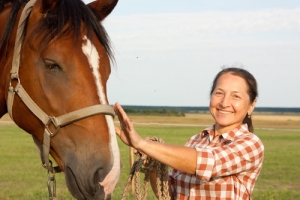
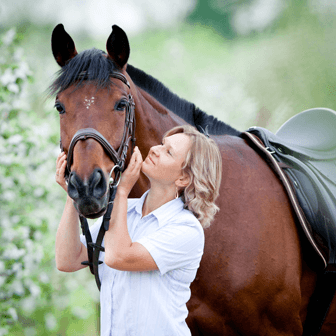
I have been through the desert on a horse with no name, and it was a profound experience. The experience I’m talking about is the Horses Helping Clinicians workshop offered through the Rio Retreat Center at The Meadows. It takes place on a beautiful ranch, tucked behind some mountains, just outside of Wickenburg, Arizona.

Relationship Therapy Workshop

The first morning of the workshop, after introductions, workshop facilitator Colleen DeRango said, “Pick a horse or let a horse pick you.” As I made my way from horse to horse, I waited for a sign, not really knowing what a sign would even look like. After standing in front of a number of horses, a black and white horse with no name picked me.

amenities

It’s hard for me to describe this experience with words. It just isn’t possible to do justice to exactly how incredible this workshop was for me. What I can tell you is that without any words at all, that horse gave me a great deal of valuable information about myself. He showed me how I relate to myself, my feelings, and my biggest challenges in life.

Register for Horses Helping Clinicians
Our professional development equine workshop, Horses Helping Clinicians: Somatic-Based Skills to Assist Clients in Restoring Resiliency, is designed to allow professionals to do their own work through the use of equine therapy, safely surrounded by their peers. While this workshop is not designed to teach therapists how to facilitate equine therapy, 18 clock hours of continuing education are offered for attendance. To enroll in this workshop, please contact our intake department at 1-866-280-2874.

Wednesday, 12 April 2017

What’s Love Got To Do With It?


At Rio Retreat Center at The Meadows, one of our most popular intensives is the Love Addiction/Love Avoidance workshop. The people that attend are often in severe Love Addiction withdrawal—it is real and it is gut-wrenching. Or, for those who are love avoidant, they have found that the pain of enduring loneliness has superseded the fear of being consumed in a relationship.


How Your Love Life Replicates Childhood Dynamics

The Meadows Senior Fellow Pia Mellody, author of Facing Love Addiction, coined the terms “love addict” and “love avoidant” and detected the cyclic dance between the two. Both of these conditions are considered attachment disorders that are borne out of childhood pain. Unintentionally, love addicts and love avoidants attract one another like magnets.

Early in treatment, Willow House at The Meadows therapists are able to identify patterns in the patient’s love life, or lack thereof, which replicate childhood dynamics. The therapists are able to turn the patient’s attention from the most recent relationship disappointment to childhood relational trauma. That is because unconsciously we draw to us people that rupture our old wounding in an effort to heal that wound.

The love avoidant learns how, to be honest, and real with others and develop healthy boundaries so they can safely engage without becoming overwhelmed.
So, what’s love got to do with it? Everything! Learning to love oneself unconditionally and how to be real with and connect with others is well worth the effort. It is truly the greatest gift one can attain and give others.

Monday, 2 January 2017

How to (Finally) Find Love in the New Year


By Tracy Harder, MSC, LAC, Workshop Therapist and Andrea Sauceda

Do you find yourself ending up in one painful, damaging, and disastrous relationship after another? Do you feel like a failure because you haven’t yet found true love?


Do you want to know the secret to finding your soul mate? Do you want to know how to find a person with whom you can live happily ever after in a perfect and blissfully all-consuming romantic relationship that books, songs, and movies have told us since we were kids that we are supposed to have?

The secret is… There is no secret. Those kinds of relationships don’t exist.

Intense and overwhelming feelings of “love at first sight” and the belief that the other person “completes you,” may actually just be delusions brought on by Love Addiction.
That sounds terribly cynical, doesn’t it? I don’t mean to say that true love—mature love—does not exist. It just means that you might have to do a little work to break through your addictive cycle before you can find it.

What is Love Addiction?

Love Addiction is characterized by feeling “high” during the initial phases of the relationship. Love Addicts often describe the feelings that come after a person has triggered their fantasy of an ideal mate as intensely pleasurable. They often make statements to the effect that this person is their “soulmate” or “love at first sight.” This person becomes the sole focus in their life, to the detriment of other relationships with children, friends, work, and self-care. Love Addicts will tolerate almost anything in the relationship due to a fear of being left.

Breaking Down the Wall of Seduction

Love Addicts are often drawn to people who are Love Avoidant. A Love Avoidant is drawn to a Love Addict’s neediness due to a belief that their role in a relationship is to take care of the other person. The Love Avoidant begins the relationship with a Wall of Seduction. In other words, they present as a “Super Woman” or “Super Man.” This Wall of Seduction impedes true intimacy.
Eventually, the Love Avoidant will become overwhelmed by the Love Addict’s neediness and will withdraw from the relationship by creating intensity outside of it, perhaps with work, a drug addiction, or another person.

Shattering the Fantasy

During the Love Addiction / Love Avoidant cycle, there typically is what Meadows Senior Fellow Pia Mellody describes as a “shattering event.” This event destroys the Love Addict’s fantasy about the Love Avoidant, throwing the Love Addict into withdrawal. The withdrawal results in extreme pain, fear, panic or even rage. Eventually, the Love Avoidant’s guilt or their own fear of abandonment may bring them back into the relationship with the Love Addict, and the cycle begins all over again.

This unhealthy cycle of behavior is unfortunately what often passes for “romance” and “love” in our society, but in reality, it is neither. It is addiction, relationship compulsivity, and a fear of love and intimacy.

A “healthy” relationship after recovery from love addiction and/or love avoidance (and yes, there can be recovery) involves what Pia refers to as “mature love.” Mature love involves loving a person “warts and all” and not leaving them or punishing them because they cannot fully embody your fantasy. A healthy relationship requires realistic expectations that are discussed openly and honestly, especially at the initial stages of the relationship.

For the Love Addict in recovery, it involves getting rid of their fantasy of the ideal mate and not demanding unconditional positive regard, self-sacrifice, and care at all times from the other person. For the Love Avoidant, it begins with coming out from behind their walls and letting their partner see who they really are.

Love addiction and Love Avoidance can occur not only with romantic partners but also with friends, children, bosses, etc.

Source Link:- Rio Retreat Center

Tuesday, 27 December 2016

Behavioral Health Workshops


Source Link: Rio Retreat Bunkhouse

The Rio Retreat Bunkhouse is designed to be conducive to the process of healing and recovery. Book your stay at The Bunkhouse when you register for your workshop for added convenience, and more immersive healing environment.
Bunkhouse lodging is available on a first come, first serve basis; early registration is recommended.


Rooms and Accommodations

The rooms at The Bunkhouse are purposely free of the distractions that often accompany hotel lodging such as TVs and phones. Rooms are very simply furnished with two twin beds, storage space, an alarm clock, and luggage stand. All rooms have their own private bathroom.
Bunkhouse occupants will have access to the swimming pool during certain hours. Modest bathing suits are required.
A Sunday evening snack will be provided. Meals will be provided from Monday morning through Noon on Friday.


Cost

$565 including tax in addition to the workshop cost. This includes lodging in a Double-Occupancy Room.
If you’d like to request a single occupancy room, the cost is $1,000 for the length of stay.
Individuals will be paired with another workshop attendee of the same sex except for instances where couples attending a couple’s workshop are allowed to room together. (Couples are not allowed to room together for the Discovery to Recovery workshop.)


Check-in and Check-out

Length of stay is from Sunday evening through Friday morning.
Check-in on Sunday is from 5:00 p.m – 9:00 p.m.
Check-out is on Friday in the morning before the workshop sessions.
On the day of check-out, participants will be asked to bring a lock for their suitcase which can be left in the room while they finish the workshop. The lock is required as rooms will be serviced during the day on Friday.

Tuesday, 15 November 2016

The Meadows Alumni Rio Retreat

The Meadows Alumni Retreat is your opportunity to reconnect, reunite, recharge, and reignite.


This retreat is only for those who have participated in one of our 5-day intensive workshops, an intensive outpatient program at The Meadows Outpatient Center, or family week or inpatient treatment at The Meadows, Claudia Black Young Adult Center, Gentle Path at The Meadows, Dawn at The Meadows, Dakota House, or Mellody House. We look forward to creating an unforgettable weekend and reuniting you with your peers!


Early bird registration fee: $250 (prior to November 19, 2016)
Regular registration fee: $300 (November 19, 2016 and after)
The registration fee includes meals and program activities.

Please contact us for any dietary or special needs at alumni@themeadows.org.

Address : 1245 Jack Burden Road,
City : Wickenburg
State : Arizona
Zipcode : 85390
Country : United States
Phone: +1 800-244-4949

Referral Link : Grief Counseling Arizona

Tuesday, 8 November 2016

Tending the Garden of Our Souls

The girl was anxious, wanting to get back to the rose bush and save it from being ravaged by the beetle that was just doing what a beetle does. Already the pattern of codependence was set up. There I was at such a young age trying to stop the destruction that seemed an inevitable pattern of my family. As though the hunger of my fearful unhappy parents were just doing what they did to survive and the child was the rose. The analogy was daunting.


Tending to the garden of our soul is not something we think about often. But Spirit, in it's divine wisdom, set up a situation for me to heal the foundation of my roots as well as protect how I bloom.

A few months ago I was getting ready to set course with a production company on a project when Spirit told me, "We want you to heal some of your history." Hum, well, of course I wondered how that would happen, but our agendas or what we think about how such a thing can transpire is often contrary to what we WANT to have happen. I like to have things be loving and copacetic so that communication can be resolved in a harmonious way. But this time I could not make that happen because Spirit had a different idea.

Source Link : Relationship Therapy Workshop

Tuesday, 28 June 2016

Confessions of a (Mostly) Reformed Perfectionist

By Tracy Harder, MSC, LAC, Survivors Workshop Facilitator
Do you remember the one question you missed on that fourth-grade science test that kept you from scoring 100 percent? Or the word you missed in every spelling bee you were in? I do.

In fact, I am very clear about the fact that water boils at 100 degrees Celsius and I am not a big fan of the words centennial, hippopotamus, or receipt. I have suffered from most of my life from perfectionism, which to me is no joke. Feeling shame about making a mistake and having the initial reaction of wanting to hide it is not fun. In fact, just the thought of writing this blog gave me anxiety. How can I possibly measure up to the people who have written blogs and have Ph.D.’s and more experience than me?

Perfectionist Tendencies Can Start in Early Childhood

My perfectionism developed and honed from a very early age. I remember when I turned four or five my parents took me to a fancy restaurant for crab legs. (What the hell?) I remember sitting there, prim and proper, with my hands folded in my lap. I remember people telling my mother what a wonderful, well-behaved child she had.

My mother beamed, and basked in the compliments. I figured out quickly, “Aha! This is how I earn my mother’s love and approval!”
From then on, I strived to make perfect grades and to always toe the line, always trying to be “good enough.” For you see, my beloved mother is a perfectionist herself and her perfect little girl reinforced her need to be good enough too.

Pia Mellody, in her book Facing Codependence, says, “Everybody’s poop smells. To be human is to be imperfect.”

She goes on to say that functional parents do not hold themselves up as the higher power in the family—the god and goddess if you will—and that when they make a parenting mistake that affects their children, they own it and make amends. But, what about those of us raised in a home where our parents were the god and goddess reigning supreme? A home in which mistakes were not okay?

I love my parents and through my own work, which has included going through The Meadows’ Survivors I childhood trauma workshop myself, I realize now that they were parenting out of their own trauma brought on by dysfunctional messages they got from their parents.

Perfectionism Hinders You More Than It Helps

Perfectionism has been a friend and a foe in my life. As a friend, it helped me a few years ago to organize and plan from the ground up what I must say was a pretty amazing wedding –although I was a complete and nervous wreck the day of. It also enabled me in some ways to complete a difficult counseling program and earn a Master’s Degree, but it took repeated attempts.

As a foe, it literally drove me to drink. And then, even after getting sober through a 12- step program, I continued to attempt perfection in my step work, which resulted in a relapse. Trying to be “perfect” can also alienate me from people, because my attitude becomes, “ I want to be perfect and am sure you must want to be as well, so let me show you how!” In respect to the core issues of The Meadows Model of Development Immaturity, this attitude is indicative of “better than” self-esteem, invulnerable boundaries, good and perfect reality issues, and containment issues of being out of control with controlling others.
Or, as Pia would say, I turn into “a tight ass.” This is not good for my relationships, to say the least.

Tips for Overcoming Perfectionist Thinking

For those of you reading this and relating, here are a few helpful techniques I use to alleviate the stress of perfectionist thinking:
  1. I give myself permission to be imperfect.
  2. I admit my mistakes to affirm that it’s okay to make mistakes.
  3. I make amends for my mistakes
  4. I remind myself that only my higher power is perfect and that I’m not my higher power.
  5. I do daily affirmations to a photo of my inner child, telling her she is perfectly imperfect just the way she is, and I treat her as such throughout the day.
The pain of the five core development immaturity issues mentioned earlier, and relationship issues drove me into therapy and 12-step programs. Both made it possible for me to practice these techniques.
As a result, there has been a considerable improvement in my relationship with myself and in my relationships with others. After all, who am I to think I could ever be perfect? Through the practice of admitting my mistakes to others I have realized that, for the most part,I am the only person who is not okay with my mistakes.
This corrective experience illuminates the fact that the people in my life now are understanding and forgiving. More often than not, they share their experiences with similar situations, thereby increasing intimacy and strengthening these relationships.
Perfectionism will always be a part of my personality, but the good news is that through insight and action it can definitely be managed.

The Meadows’ Survivors Workshop

The concepts and therapeutic exercises that comprise the Survivors I workshop, are the same ones that drive the overall treatment philosophy for all of The Meadows programs. Participants explore the childhood trauma that fuels self-defeating behaviors such as addiction, mood disorders, and troubling relationships. They also work on processing and releasing negative messages and emotions rooted in their pasts, and find the freedom to fully embody their authentic selves.
Those who register for Survivors I—or any of the Rio Retreat Center’s other 16 workshop offerings— on or before June 30 will receive a 25 percent discount. Call today at 800-244-4949.

Source Link